
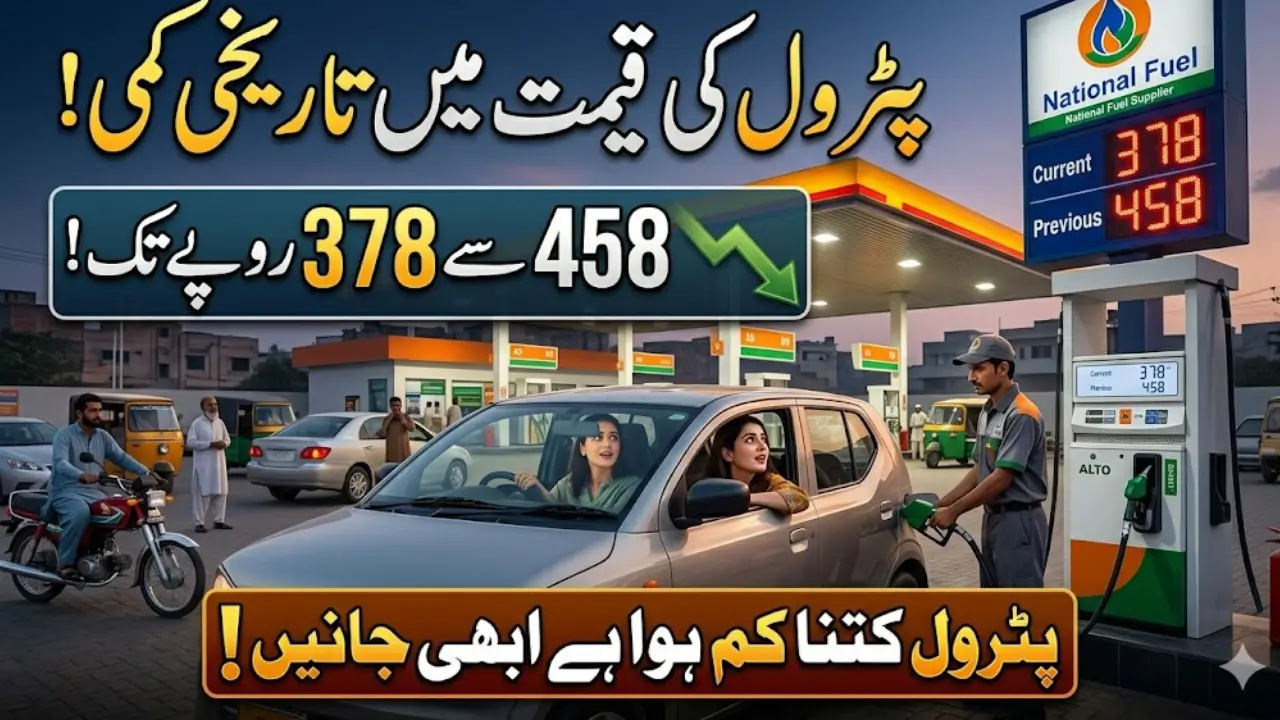
PM Announces Major Cut in Petrol Prices
PM Announces Major Cut in Petrol Prices: The recent decision by the government to significantly reduce petrol prices has brought a wave of relief across Pakistan. After a sudden and sharp increase that had pushed fuel costs to record highs, the latest revision has eased pressure on households and daily commuters. This move is being seen as a timely intervention aimed at stabilizing the economic situation for millions of citizens who rely heavily on petrol for transportation and daily activities.
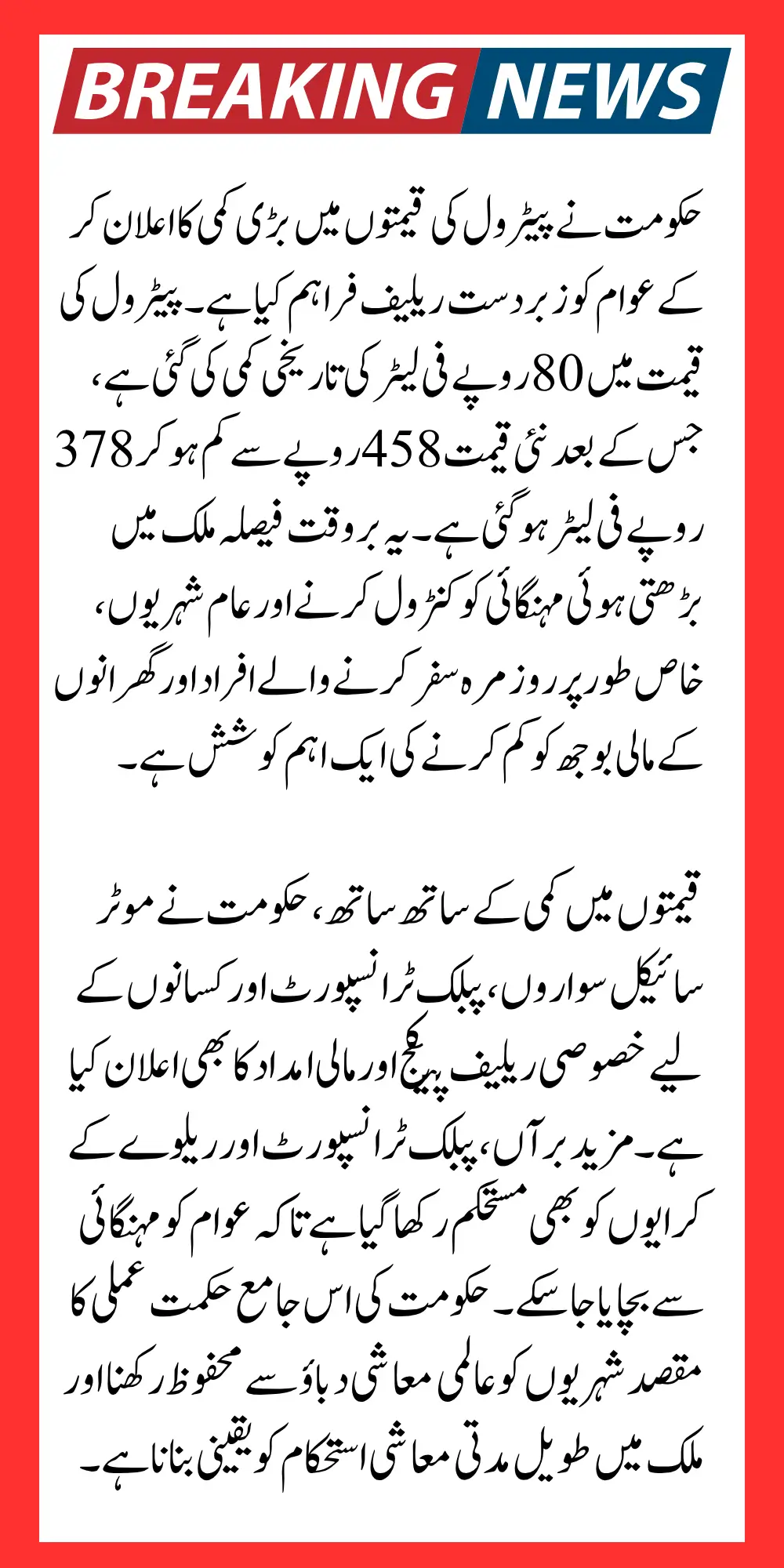
The reduction is not just a routine adjustment but part of a broader effort to manage inflation and protect purchasing power. Fuel prices directly impact almost every sector, from transportation to food supply chains. By lowering the cost of petrol, the government is attempting to control the ripple effects that high fuel prices have on the overall cost of living.
You Can Also Read: PM Sasta Petrol Scheme 2026 Applying Process Step by Step
| Sector / Focus Area | Key Relief Measure |
|---|---|
| General Public | Petrol price slashed by Rs 80 (from Rs 458 to Rs 378 per litre). |
| Motorcyclists | Subsidized fuel rates introduced for daily commuters. |
| Public Transport | Fares kept stable; financial support provided to operators. |
| Agriculture | Financial assistance for small farmers to lower production costs. |
| Railways | Economy-class fares remain completely unchanged. |
| Overall Economy | Aims to control inflation, ease cost of living, and protect purchasing power. |
Impact of Global Oil Prices on Pakistan Economy
Pakistan’s fuel pricing structure is closely tied to international oil markets, which have experienced volatility in recent times. Fluctuations in global crude oil prices often force the government to adjust domestic rates, leading to sudden increases that affect the general public. These changes are usually influenced by geopolitical tensions, supply disruptions, and currency fluctuations.
Despite these external challenges, the government has taken steps to cushion the impact on citizens. By absorbing a portion of the cost through national resources, authorities are trying to ensure that global economic pressures do not fully translate into local financial hardship. This strategy reflects an attempt to balance economic realities with public welfare.
You Can Also Read: Petrol Subsidy 2026 Rs 100/Liter Discount for Pakistan Bikers Check Eligibility
How Much Petrol Price Has Been Reduced in Pakistan?
- Petrol price decreased from Rs458 per litre to Rs378 per litre
- Total reduction recorded is Rs80 per litre
- This is considered one of the biggest single cuts in recent months
- The reduction came shortly after a sharp increase in fuel prices
- Government intervened to ease pressure on the public
- The decision aims to control rising inflation linked to fuel costs
- Relief expected for daily commuters, transport sector, and households
Government Strategy to Control Inflation and Fuel Costs
The reduction in petrol prices is part of a larger economic strategy aimed at controlling inflation. Rising fuel costs often lead to increased prices for goods and services, making it harder for low- and middle-income families to manage their expenses. By lowering petrol rates, the government is indirectly supporting various sectors that depend on transportation and logistics.
In addition to price cuts, financial resources have been allocated to stabilize the situation over the past few weeks. This indicates a proactive approach where authorities are not only reacting to global changes but also implementing measures to maintain economic balance within the country. Such decisions are crucial in maintaining public confidence during uncertain times.
Relief Measures for Motorcyclists and Public Transport
To further support citizens, the government has introduced targeted relief initiatives alongside the petrol price reduction. These measures are designed to benefit those who are most affected by fuel price fluctuations, particularly daily wage earners and small-scale transport operators.
Key Relief Initiatives
- Subsidized fuel rates for motorcycle users to reduce daily commuting expenses
- Financial support programs for public transport operators
- Assistance for goods transport vehicles to control logistics costs
- Special focus on low-income groups heavily dependent on fuel
- Measures aimed at stabilizing fares for passengers
These initiatives highlight the government’s effort to provide direct relief to segments of society that rely on affordable fuel for their livelihoods.
Support for Farmers and Agricultural Sector
The agricultural sector, which plays a vital role in Pakistan’s economy, has also been included in the relief package. Farmers often face rising costs due to expensive fuel, which affects irrigation, transportation of produce, and overall productivity. By offering financial assistance, the government aims to reduce the burden on small farmers and ensure continued agricultural output.
This support is expected to have long-term benefits, including stable food prices and improved rural economic conditions. By addressing the needs of farmers, the government is also working to strengthen food security and reduce inflationary pressures linked to agricultural production.
Stability in Public Transport and Railway Fares
Another important aspect of the relief measures is maintaining stability in public transport fares. With fuel prices being a major factor in fare calculations, any increase can significantly impact daily commuters. By controlling fuel costs, the government is ensuring that transport fares remain affordable for the general public.
In addition, the decision to keep railway economy-class fares unchanged reflects a commitment to providing affordable travel options. This is particularly beneficial for lower-income groups who depend on rail transport for long-distance travel. Maintaining fare stability helps prevent additional financial strain on households.
Key Highlights of Petrol Price Relief Package
- Significant reduction in petrol prices after a record high spike
- Government allocated large financial resources to stabilize fuel costs
- Subsidy programs introduced for motorcycles and transport sector
- Financial assistance provided to small farmers
- Public transport and railway fares kept stable
- Focus on reducing inflation and supporting low-income groups
- Efforts to protect citizens from global economic shocks
Economic Challenges and Government Response
Pakistan is currently navigating a complex economic landscape influenced by both domestic and international factors. Rising global oil prices, currency fluctuations, and inflation have created challenges that require careful management. The government’s response, including fuel price adjustments and subsidies, is part of an effort to address these issues effectively.
By implementing these measures, authorities are attempting to strike a balance between fiscal responsibility and public relief. While reducing fuel prices may impact government revenues, it is seen as a necessary step to support citizens during difficult economic conditions. This approach demonstrates a focus on long-term stability rather than short-term gains.
Public Reaction and Economic Outlook
The reduction in petrol prices has been widely welcomed by the public, especially after the recent surge that had caused concern across the country. Lower fuel costs are expected to ease financial pressure on households and improve overall consumer confidence. Businesses, particularly those in the transport and logistics sectors, are also likely to benefit from reduced operational costs.
Looking ahead, the sustainability of such relief measures will depend on global market trends and domestic economic policies. Continued efforts to manage inflation, support key sectors, and maintain price stability will be essential in ensuring long-term economic growth. The government’s current strategy suggests a commitment to addressing immediate challenges while planning for future stability.
Conclusion
The recent petrol price reduction marks a crucial step in providing economic relief to the people of Pakistan. By combining price cuts with targeted subsidies and support programs, the government is addressing both immediate and long-term challenges. These measures are expected to ease the burden on households, support key economic sectors, and contribute to overall stability.
While global uncertainties continue to pose risks, proactive policies and strategic interventions can help mitigate their impact. The current relief package reflects an effort to prioritize public welfare while maintaining economic balance, offering hope for a more stable and manageable financial environment in the coming months.